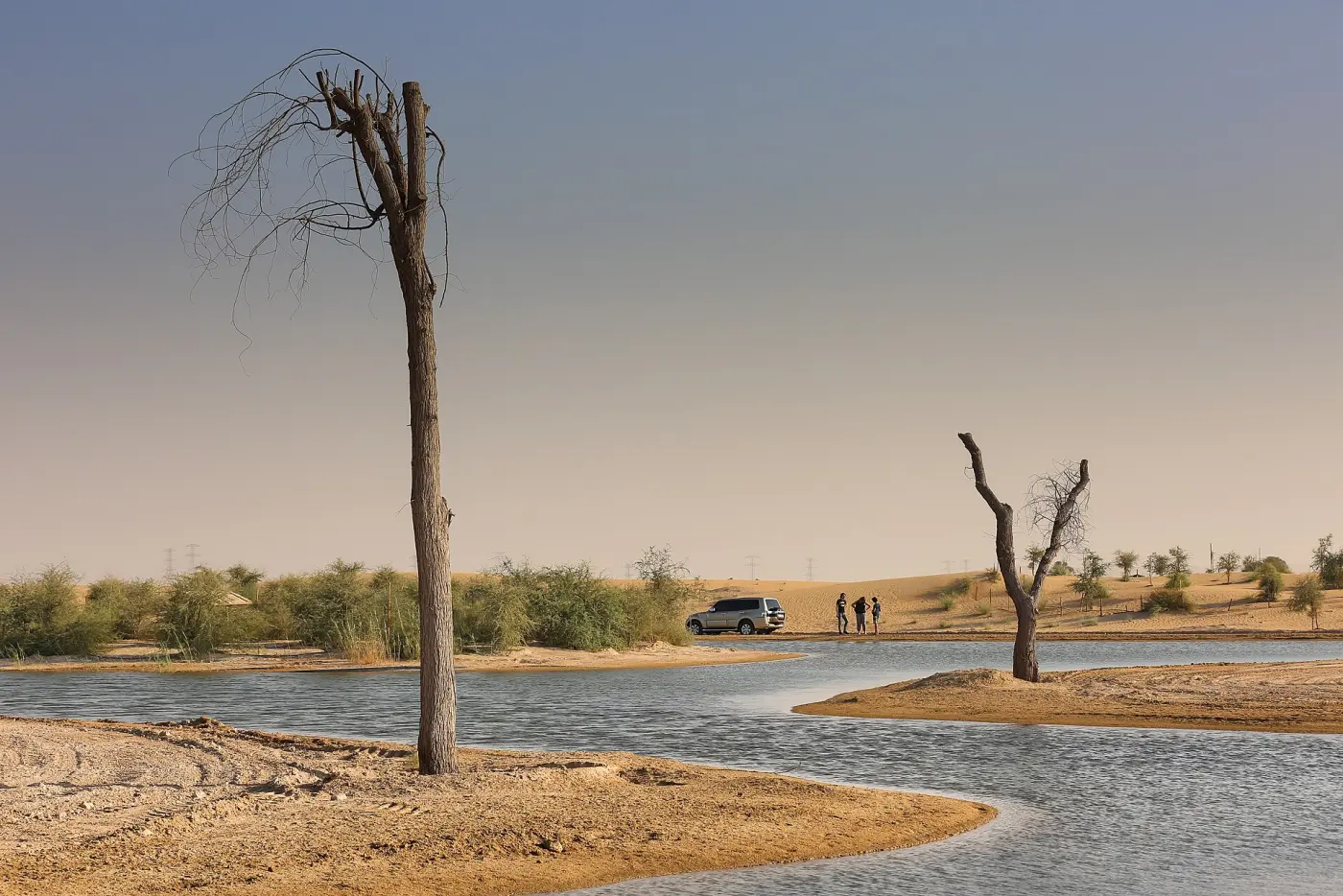
Al Qudra Cycle Track: Pedalling Through Dubai's Desert
Al Qudra Cycle Track is a ribbon of smooth tarmac laid across the desert south of Dubai, and it is the closest thing the city has to proper open-road cycling. No traffic lights, no tourists wandering into your lane, just dunes, scrub, a few lakes and the occasional gazelle giving you a look of mild disapproval.
This guide covers renting a bike, when to ride so you do not melt, and a first-ride plan that will not leave you stranded 20 km from anywhere with an empty bottle.
- Entry
- Free (rental extra)
- Hours
- Open 24 hours; parts lit at night
- Length
- Loops of 50 km+, longer network
- Drive
- Roughly 35 to 45 min from central Dubai
- Best time
- Nov to Mar; pre-dawn in summer
- Rental
- Trek shop near start; check prices
Top photo: JSPhotography2016, CC BY-SA 4.0, via Wikimedia Commons (see credits).
What Al Qudra Cycle Track actually is
Think of it as a set of looping paved paths, not one neat line. The main loops add up to more than 50 km, and the wider network is often quoted at well over 80 km once you include the extensions. You can ride a short out-and-back of 10 to 15 km or commit to a full day. Nobody is checking.
The surface is a dedicated, fenced-off-from-cars path run by Dubai authorities, wide enough for groups to ride two abreast. It is flat with gentle rolls, which is why beginners, kids on training wheels and serious road cyclists all share it. The speed difference between those groups is the main hazard, so keep right and look behind before you stop.
Access is free and the track never officially closes. Some sections are floodlit for evening riding, but not the whole network, so do not assume a lit start means a lit finish. Check which parts are lit before a night ride, and carry your own lights anyway.
Renting a bike
If you do not have your own bike, a Trek-branded shop near the start of the track is the usual choice for rentals. Expect road bikes, hybrids and mountain bikes, plus helmets and sometimes kids' sizes. Because the track is paved, a hybrid is the sweet spot for most visitors: comfortable, forgiving, and nobody judges it. Road bikes are faster but less friendly on your first desert-wind day.
I will not quote a price, because rates change by bike type and duration. Check current prices and opening hours with the shop directly before you drive out, and bring your passport or Emirates ID plus a card in case a deposit is required. On winter weekends the good bikes go early, so arrive early or reserve ahead if the shop allows it.
Before leaving the shop, check brakes, tyre pressure and saddle height. Ask for a spare tube or a pump if you are going far. A flat tyre 15 km into the desert is a very long walk.
Timings: when to ride and when to stay home
November to March is prime season: cool mornings, pleasant afternoons, and a track that feels like a social club. Weekends are busiest, with big cycling groups at dawn. Weekdays are quieter and nicer.
Summer is a different sport. From roughly May to September, start before sunrise (think 5am or earlier) and be done by mid-morning. Midday heat on open tarmac is genuinely dangerous, and there is almost no shade. If you are a visitor in July, riding at 10am will teach you a hard lesson about desert sun.
Evening rides work well in cooler months. Sunset over the dunes is the best light of the day, but plan to finish your loop while there is still some, especially if you are not sure which stretches are lit.
A first-ride plan that works
Keep your first outing modest. A realistic beginner plan is 20 to 30 km total, which is a good two hours with stops. Ride out in one direction for an hour, turn around, and let the return be the easy half. Wind direction matters: if you have a tailwind going out, the way back will humble you.
- Water: carry more than you think; at least a litre per hour in warm weather. Facilities along the track are limited, so do not count on shops.
- Sun: sunscreen, sunglasses and a cap under your helmet or a light long-sleeve top.
- Snacks: dates, bananas or a bar. Dates are very on-theme.
- Phone: charged, with an offline map. Signal can be patchy in places.
Watch for patches of wind-blown sand, especially after a windy day. They are slippery and can catch a narrow tyre. Slow down, go straight, and do not brake mid-patch.
What you will see, and the Love Lake detour
The desert here is more alive than it looks. Arabian oryx and gazelles are regularly spotted near the track, usually at a distance and often at dawn. Keep your distance, do not feed them, and never leave the track to chase a photo; it stresses the animals and the sand is soft.
The Al Qudra lakes draw birds, and depending on the season you may see flamingos, herons and ducks. If you want a more reliable flamingo fix, Ras Al Khor Wildlife Sanctuary is easier to plan around.
The heart-shaped Love Lake sits close to the track and is a popular stop for photos. It is a short detour, but it gets busy at sunset with picnics and drones, so expect company. Respect the quiet and take your rubbish with you.
Getting there and practicalities
The easiest way is by car: roughly 35 to 45 minutes from central Dubai outside rush hour, with parking near the start. Taxis and ride-hailing work for the outbound trip, but coverage back can be thin on a quiet morning, so book your return in advance or travel with someone who drives. Public transport is not a convenient option.
Bring a bike rack if you own a bike; many people do. Facilities near the start can include a cafe and toilets, but hours vary. Check before relying on them, and use them before you head out. Out on the loops, there is very little.
Wear a helmet. Even on a quiet track, a crash at 30 km/h on tarmac is unpleasant, and the nearest hospital is not near. Stay off the road crossings without looking twice; cars and desert vehicles do appear.
Is it worth it?
Yes, if you like cycling or want a calm morning away from the city. The track is well kept, the scenery is surprisingly varied, and a flat 30 km ride with desert light is a great way to spend a Dubai morning. It is also one of the few places in the city where a beginner can ride without fear of traffic.
No, if you dislike heat, wind or long stretches of nothing. The landscape is subtle rather than spectacular, and in summer it is simply too hot at most hours. It is also a poor choice without a car or a confirmed ride home. Go in winter, start early, carry plenty of water, and you will probably become one of those people who says, "you should come out to Al Qudra" far too often.
Quick answers
Is Al Qudra Cycle Track free?
Yes, using the track is free and it is open around the clock. You only pay if you rent a bike or buy food and drink. Check current prices for rentals.
Can I rent a bike at Al Qudra Cycle Track?
Yes, a Trek shop near the start is the usual option, with road bikes, hybrids and mountain bikes. Confirm hours, availability and prices with the shop before you go.
What is the best time to cycle Al Qudra?
November to March is the most comfortable. In summer, start before sunrise and finish by mid-morning, as midday heat is dangerous and shade is minimal.
Is Al Qudra Cycle Track good for beginners?
Yes. It is flat, paved and traffic-free. Start with 20 to 30 km, carry plenty of water, and watch for sand patches and faster riders behind you.
Want more wildlife after your ride? Visit Love Lake or plan a flamingo stop at Ras Al Khor Wildlife Sanctuary.